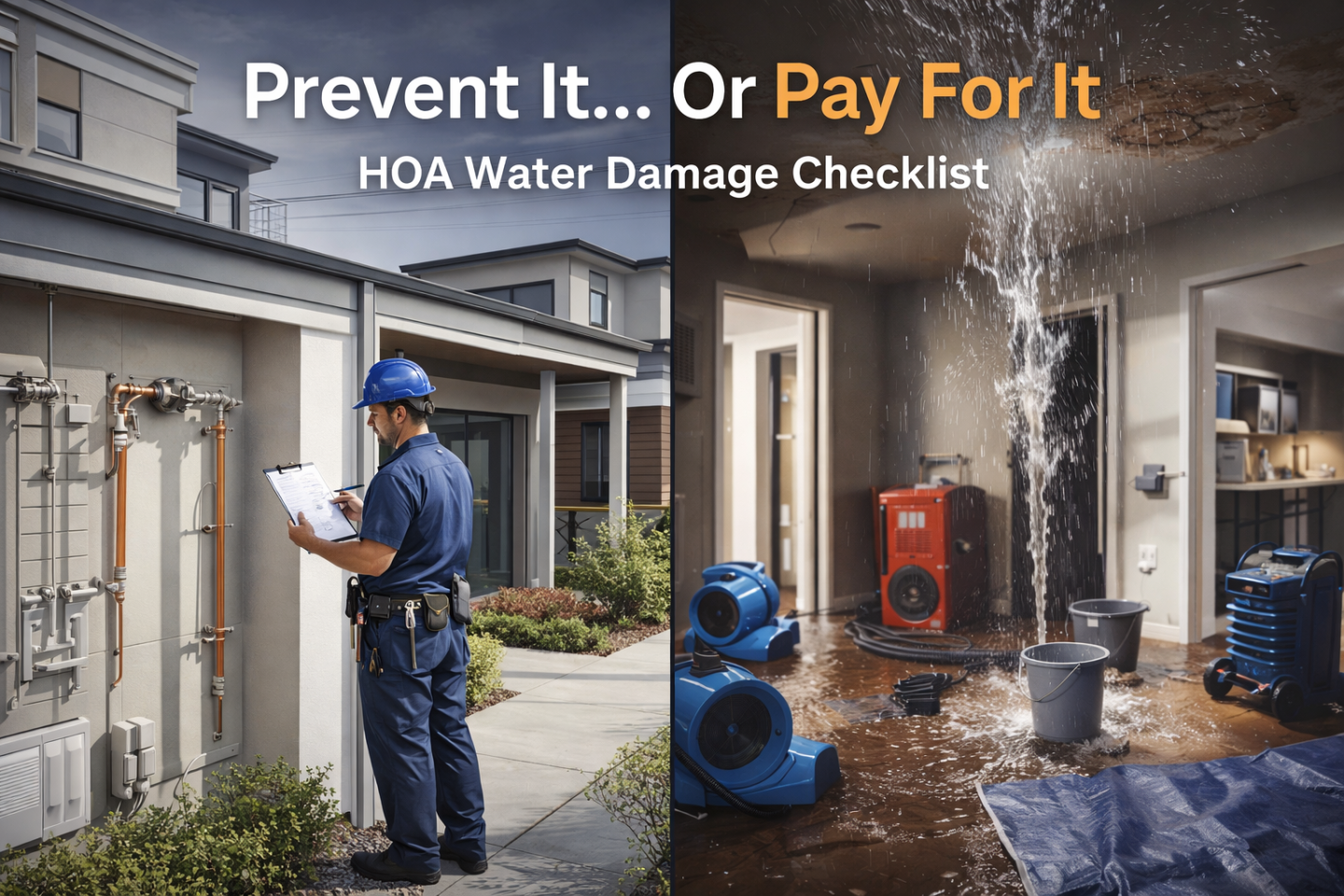
DOWNLOAD HOA WATER DAMAGE CHECKLIST HERE!
“This is how you control your insurance future… not when renewal hits, but how you operate every day.”
Water damage is the most common and most preventable claim in HOAs. Yet too often, communities focus on insurance at renewal instead of focusing on the operational decisions that actually drive claims.
The truth is simple: Insurance outcomes are a reflection of daily operations.
If you want lower premiums, better coverage options, and fewer headaches… you need a system.
Below is a practical checklist every HOA manager and board can use to reduce risk, respond faster, and control costs.
Part 1: Preventative Readiness
Property & Systems (Risk Reduction)
Water losses rarely come out of nowhere. Most start as small, known issues that were never addressed.
- Roofing inspected and documented
- Plumbing system evaluated (age, leaks, shut-off valves tested)
- Irrigation system audited (leaks, drainage, overspray, soil conditions)
- Building envelope checked (windows, seals, flashing)
👉 “Most claims don’t come from surprises… they come from things we knew about and didn’t fix.”
Inspections & Documentation
Good communities don’t just maintain their property… they prove it.
- Routine inspection schedule in place (at least annually)
- Maintenance logs updated and accessible
- Prior water loss areas tracked and monitored
- Before/after photos of repairs stored
👉 “Strong documentation = better insurability.”
Carriers are looking for evidence, not intentions.
Claims & Risk Tracking
Your loss history follows you… and it matters more than ever.
- Last 5 years of claims reviewed annually
- Repeat loss areas identified and addressed
- Root cause fixes completed (not just patched)
👉 “Repeat claims are what get you non-renewed… not just big claims.”
Vendor Readiness (Critical)
Most HOAs don’t have a water damage problem… they have a response problem.
- Primary restoration vendor pre-selected
- Backup vendor identified
- Pre-set protocols defined (scope, approvals, coverage expectations)
👉 “No readiness = delay… delay = higher cost and bigger claims.”
If you’re figuring out who to call during a loss… you’re already behind.
Board-Level Risk Management
Risk management is not just a manager responsibility — it’s a board responsibility.
- Board reviews risk and insurance quarterly
- Maintenance budget aligned with risk exposure
- Major upgrades tracked (roof, re-pipe, etc.)
- Emergency response plan documented
Strong leadership is one of the biggest differentiators between insurable and uninsurable communities.
Part 2: Water Loss Response Checklist (When It Happens)
Immediately (This Is Everything)
The first hour determines the outcome.
- Water source identified and stopped
- Restoration vendor called immediately
- Access provided (units, common areas, etc.)
- Photos and videos taken
👉 “Every hour of delay increases damage.”
First 24 Hours
This is where costs either stay controlled… or start to escalate.
- Emergency mitigation started (extraction, containment)
- Affected areas isolated to prevent spread
- Insurance carrier notified (if applicable)
- Communication sent to stakeholders (board, residents, etc.)
👉 “Speed is the #1 driver of claim cost… not the leak itself.”
During Mitigation (Days 1–5)
Execution matters just as much as speed.
- Drying equipment installed and monitored
- Moisture readings documented
- Scope controlled (avoid unnecessary demolition)
- Regular updates from vendor
The goal is simple: dry, not destroy.
Decision Control (Where Money Is Lost)
Most cost overruns don’t come from the damage… they come from confusion.
- Clear authority limits for approvals (no delays)
- Manager, vendor, and board aligned (plus adjuster if involved)
- Root cause identified early
👉 “Confusion between vendor, manager, and carrier = cost overruns.”
Post-Loss (Where You Win Long-Term)
What you do after the job matters just as much as the response.
- Root cause permanently fixed (this is critical)
- Claim documented and stored
- Lessons learned reviewed with the board
- Preventative improvements implemented
👉 The goal is the virtuous cycle:
Faster response → Lower severity → Fewer large losses → Better insurability
Final Thoughts
Strong communities are proactive communities.
The best time to prepare for a water loss is before it happens.
The best time to improve your insurance program is before renewal.
The best time to build your vendor team is today.
If you follow this checklist consistently, you won’t just reduce claims…
you’ll control your insurance future instead of reacting to it.
DOWNLOAD HOA WATER DAMAGE CHECKLIST HERE!