In today’s insurance environment, HOA managers are facing a new reality…
- Rising premiums
- Higher deductibles
- Coverage restrictions
- Even non-renewals
And while many assume this is out of their control, the truth is:
The condition and management of your property play a major role in your insurance outcomes.
The Shift: From Maintenance to Risk Management
Traditionally, property management has focused on maintenance—fixing issues as they arise.
But today, that’s not enough.
Insurance carriers are looking deeper. They are evaluating:
- How well your property is maintained
- Your history of claims
- How quickly and effectively you respond to issues
- Whether problems are truly fixed—or just temporarily patched
This means HOA managers must shift from being reactive… to becoming proactive risk managers.
Why This Matters More Than Ever
Across the HOA industry, we are seeing clear trends:
1. Water Damage Claims Are Increasing
Water losses are the most frequent and often the most preventable type of claim.
Common causes include:
- Aging plumbing systems
- Roof leaks
- Poor drainage and irrigation overspray
- Failed window and door seals
Left unaddressed, these small issues turn into large, expensive claims.
2. Repeat Claims Are a Major Red Flag
Insurance carriers pay close attention to patterns.
Multiple claims—even small ones—can lead to:
- Significant premium increases
- Policy restrictions
- Non-renewal notices
Repeat losses signal that underlying issues have not been resolved.
3. Deferred Maintenance Is Under Scrutiny
What used to be considered “normal wear and tear” is now viewed differently.
Insurance underwriters are asking:
- Are systems being inspected regularly?
- Are repairs handled promptly?
- Is there documentation to prove it?
Communities that cannot demonstrate proactive maintenance are seen as higher risk.
The Four Systems That Drive Most HOA Claims
While every property is different, the majority of claims typically come from four key areas:
Roofing Systems
Your first line of defense against water intrusion.
Even minor roof issues can lead to major interior damage if not addressed early.
Plumbing Infrastructure
Aging pipes, pressure issues, and recurring leaks are one of the biggest drivers of claims.
These issues often go unnoticed—until damage occurs.
Building Envelope (Windows, Doors, Exterior)
Small failures in seals, flashing, or caulking allow water to enter over time.
These are often hidden issues that become costly problems later.
Irrigation & Drainage
Overspray, poor drainage, and pooling water expose buildings to constant moisture.
These are some of the most preventable causes of water damage.
Speed of Response: The Hidden Cost Factor
When a loss occurs, timing is everything.
Every hour of delay allows water to spread, increasing:
- The scope of damage
- The cost of repairs
- The likelihood of mold
In many cases, what could have been a minor issue becomes a major claim simply due to delayed response.
Communities that have:
- Pre-selected vendors
- Clear emergency protocols
- Fast response capabilities
…consistently see better outcomes and lower overall claim costs.
What Separates a “Good Risk” from a “High Risk” HOA?
From an insurance perspective, the difference is clear.
Well-Positioned Communities:
- Perform regular inspections
- Address issues proactively
- Maintain strong documentation
- Have minimal or improving claim history
- Respond quickly to incidents
Higher-Risk Communities:
- Rely on reactive maintenance
- Have recurring issues in the same areas
- Lack documentation
- Experience frequent or severe claims
- Delay response to emergencies
A Practical Approach: Self-Evaluating Your Community
One of the most effective steps an HOA manager can take is to conduct a structured evaluation of their property.
A proper assessment should include:
- Roof condition and maintenance
- Plumbing system risk and history
- Building envelope integrity
- Irrigation and drainage performance
- Past claims and response time
- Maintenance processes and documentation
- Emergency preparedness
By identifying risks early, managers can prioritize improvements before they turn into costly claims.
The Bottom Line
Strong communities are not reactive—they are proactive.
The best time to:
- Prevent a claim
- Improve your insurance position
- Reduce long-term costs
…is before a problem occurs.
How ServiceFirst Restoration Helps
At ServiceFirst Restoration, we work with HOA managers to:
- Identify hidden risks before they become claims
- Respond quickly and effectively when losses occur
- Help reduce claim severity and long-term costs
- Support better insurance outcomes through proactive strategies
If you’d like help evaluating your community or building a risk reduction plan, our team is here to help.
Final Thought
In today’s market, doing nothing is no longer neutral—it’s a risk.
Taking a proactive approach to maintenance and risk management isn’t just good practice…
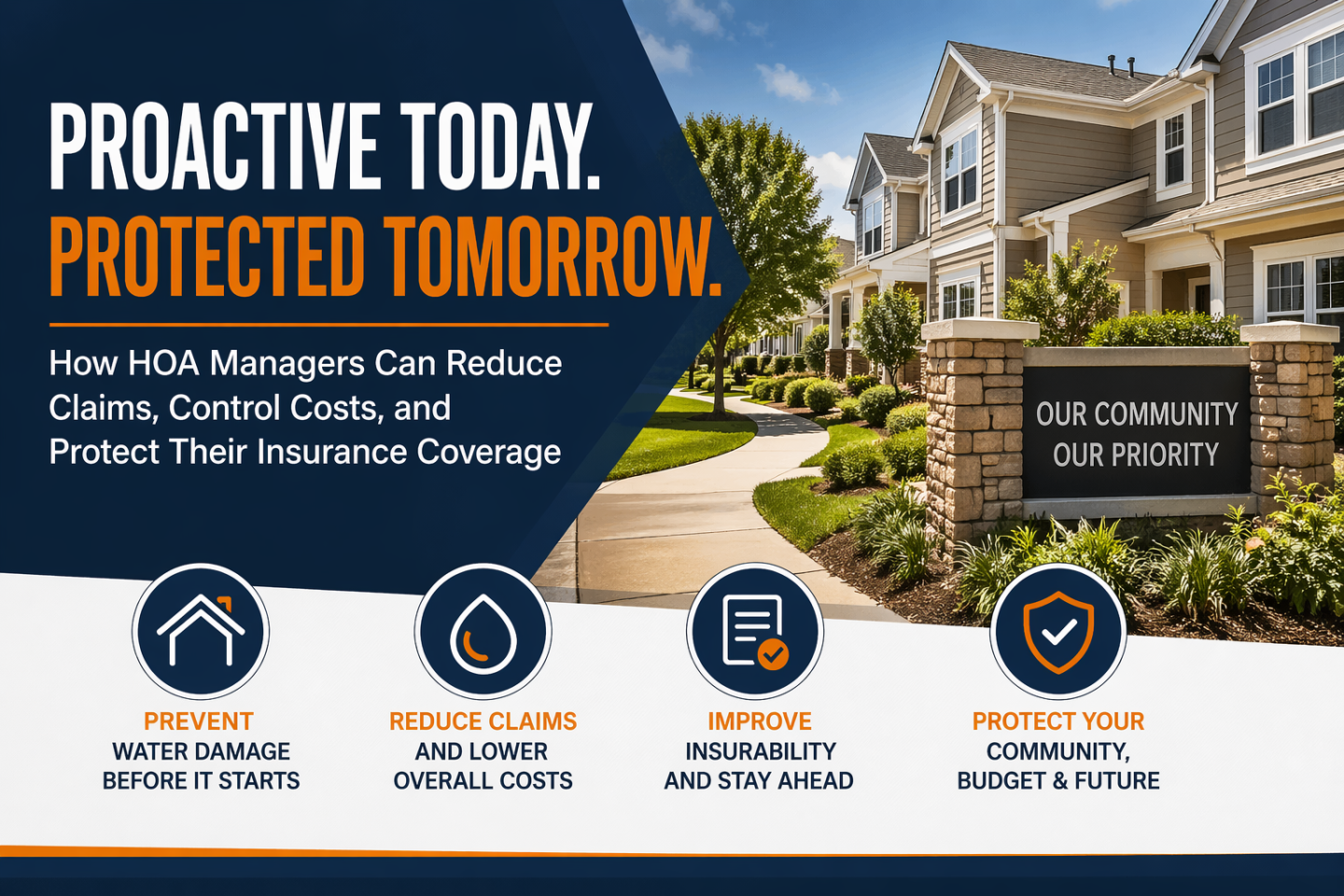
It’s essential to protecting your community, your budget, and your insurability.